book

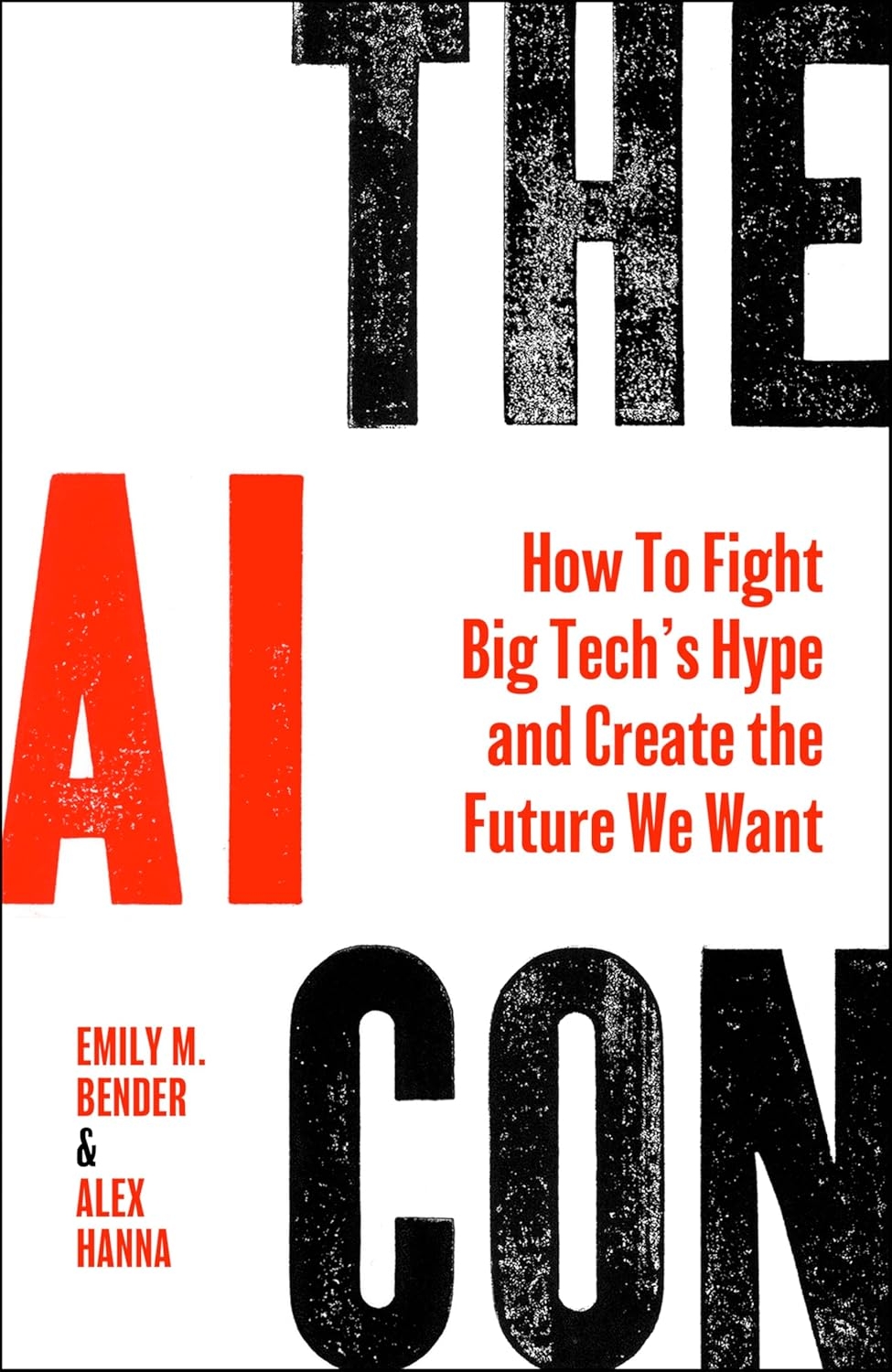
The AI Con: How to Fight Big Tech’s Hype and Create the Future We Want

  • Writen by Bender , Emily M. , Hanna , Alex
  • Publisher Matt & Tom Oldfield
  • ISBN 9781847928627
  • Publication Date 2025

Is artificial intelligence going to take over the world? Have big tech scientists created an artificial lifeform that can think on its own? Is it going to put authors, artists, and others out of business? Are we about to enter an age where computers are better than humans at everything?

The answer to these questions, linguist Emily M. Bender and sociologist Alex Hanna make clear, is “no,” “they wish,” “LOL,” and “definitely not.” This kind of thinking is a symptom of a phenomenon known as “AI hype.” Hype looks and smells fishy: It twists words and helps the rich get richer by justifying data theft, motivating the surveillance capitalism that powers large language models, and devaluing human creativity to replace meaningful work with jobs that treat people like machines. In The AI Con, Bender and Hanna offer a sharp, witty, and wide-ranging take-down of AI hype across its many forms.

Bender and Hanna show you how to spot AI hype, how to deconstruct it, and how to expose the power grabs it aims to hide. Armed with these tools, you will be prepared to push back against AI hype at work, as a consumer, as a skeptical newsreader, and as a citizen holding policymakers to account. Together, they expose AI hype for what it is: a mask for Big Tech’s drive for profit and power, with little concern for who it affects.

This essential guide to tech ethics provides the critical thinking tools you need to see past the con:

  • Deconstruct AI Hype: Learn to spot the linguistic tricks and false promises that frame machine learning as magic, from “sentient” chatbots to the myth of superhuman intelligence.
  • Expose Big Tech’s Power Play: See how a handful of powerful companies use the AI narrative to justify data theft, devalue human labor, and consolidate control over our digital lives.
  • Focus on Real-World Harms: Move beyond science fiction doomsday scenarios to understand the actual, immediate dangers of biased algorithms, worker exploitation, and surveillance capitalism.
  • A Social Science Perspective: Arm yourself with sharp, witty analysis from a linguist and a sociologist who reveal what’s truly at stake for our jobs, our privacy, and our world.
Suggested Books

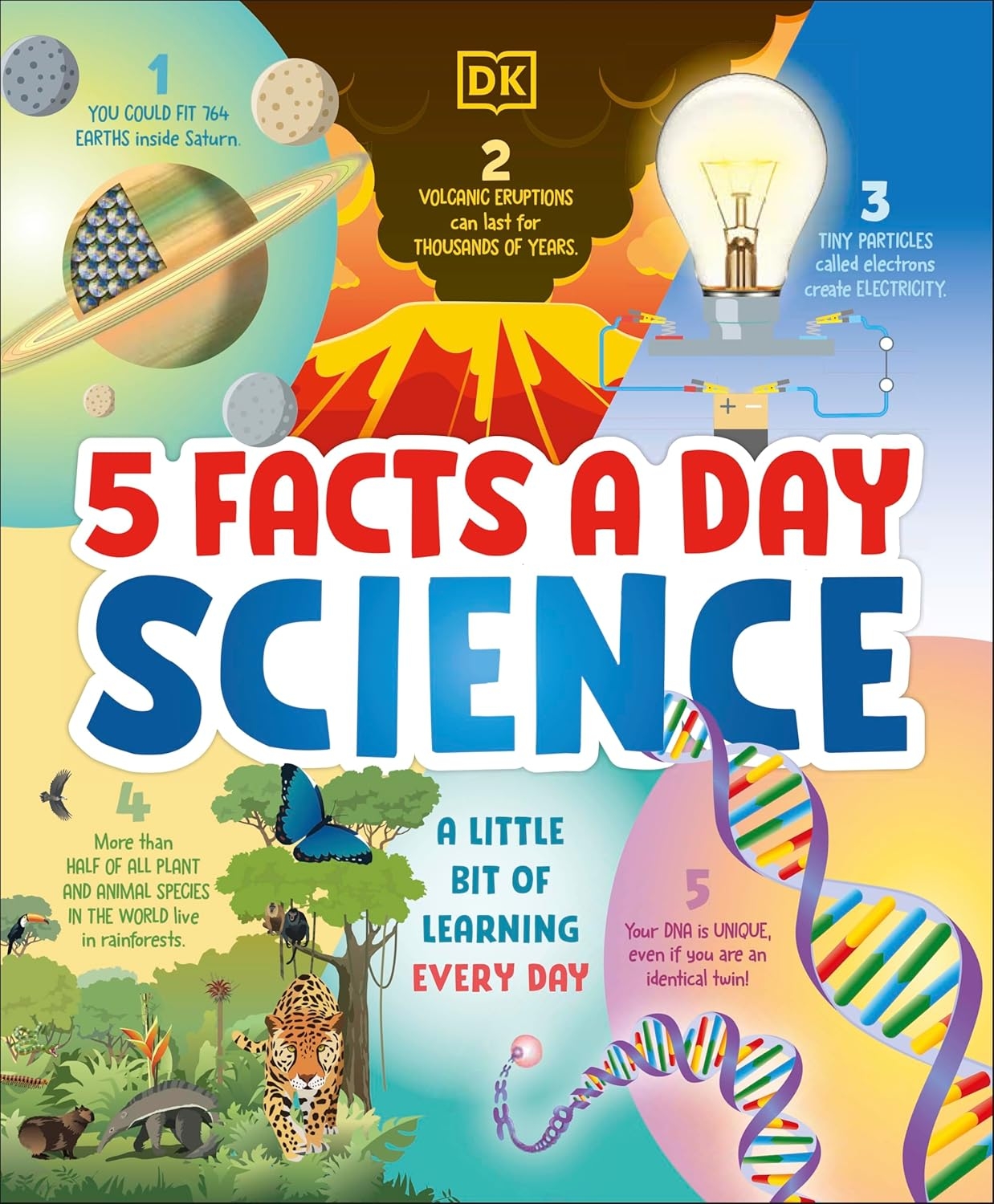
Are you ready to have your mind blown? Wow all your friends and family with 5 jaw-dropping facts about science each day.

Discover 5 facts a day, 5 days a week with this exciting science book for children aged 8-12. With five facts a day, every day of the year, that's more than 1,825 nuggets of knowledge!

From rocks to robots, and cells to solar systems, this eye-opening book covers more than 250 different science topics in an easy-to-read, entertaining, and bite-sized way to build on your knowledge as you go. Enjoy learning something new every day or just dip in and out for fun.

This science book for children offers:

  • An engaging layout, with different subjects and facts to explore every day.
  • More than 250 different science topics, from electromagnetism to evolution.
  • Fun, educational content for children to have fun whilst learning about science.


Did you know that you can't burp in space? Or that bananas are slightly radioactive? Or that there are more trees on Earth than there are stars in our solar system? Discover the science behind all these facts and much more with 5 Facts a Day: Science.

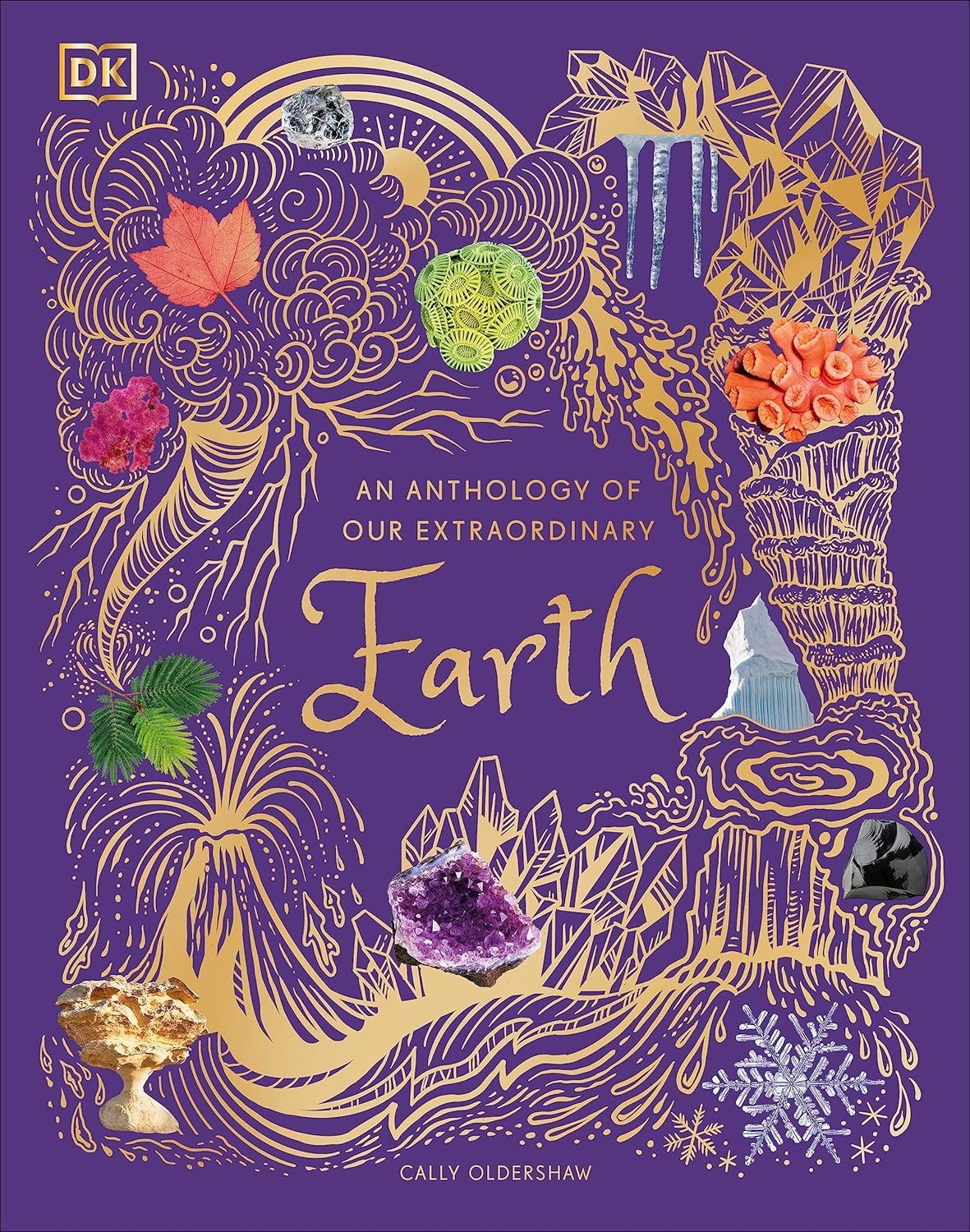
From molten-hot rock and smouldering volcanoes to icy glaciers and bubbling springs, this stunning compendium unlocks the mysteries of our living, breathing planet Earth. The latest title in the hugely popular Anthology series, An Anthology of Our Extraordinary Earth looks at our constantly changing planet, with breathtaking images and compelling narrative text. The book explores rushing waterfalls, magical dark caves, and weaving rivers In clear and lively prose that makes complex scientific ideas easy to understand for kids. Starting at the centre of the Earth, the book examines each layer in forensic detail: from Earth's metallic core, drilling through Earth's tough crust until emerging out onto the planet's surface, with its lush green rainforests, sparkling oceans, and snow-capped mountains, before sailing up into Earth's airy atmosphere. This fabulous book cannot fail to excite budding geologists, geographers, environmentalists, and all-round planet Earth enthusiasts everywhere.

With foil on the cover, gilded edges, and a ribbon for keeping your place, this book makes an attractive gift for any child who is fascinated by our planet. With engaging information and absorbing images, this book is perfect for children to explore by themselves or for bedtime stories.

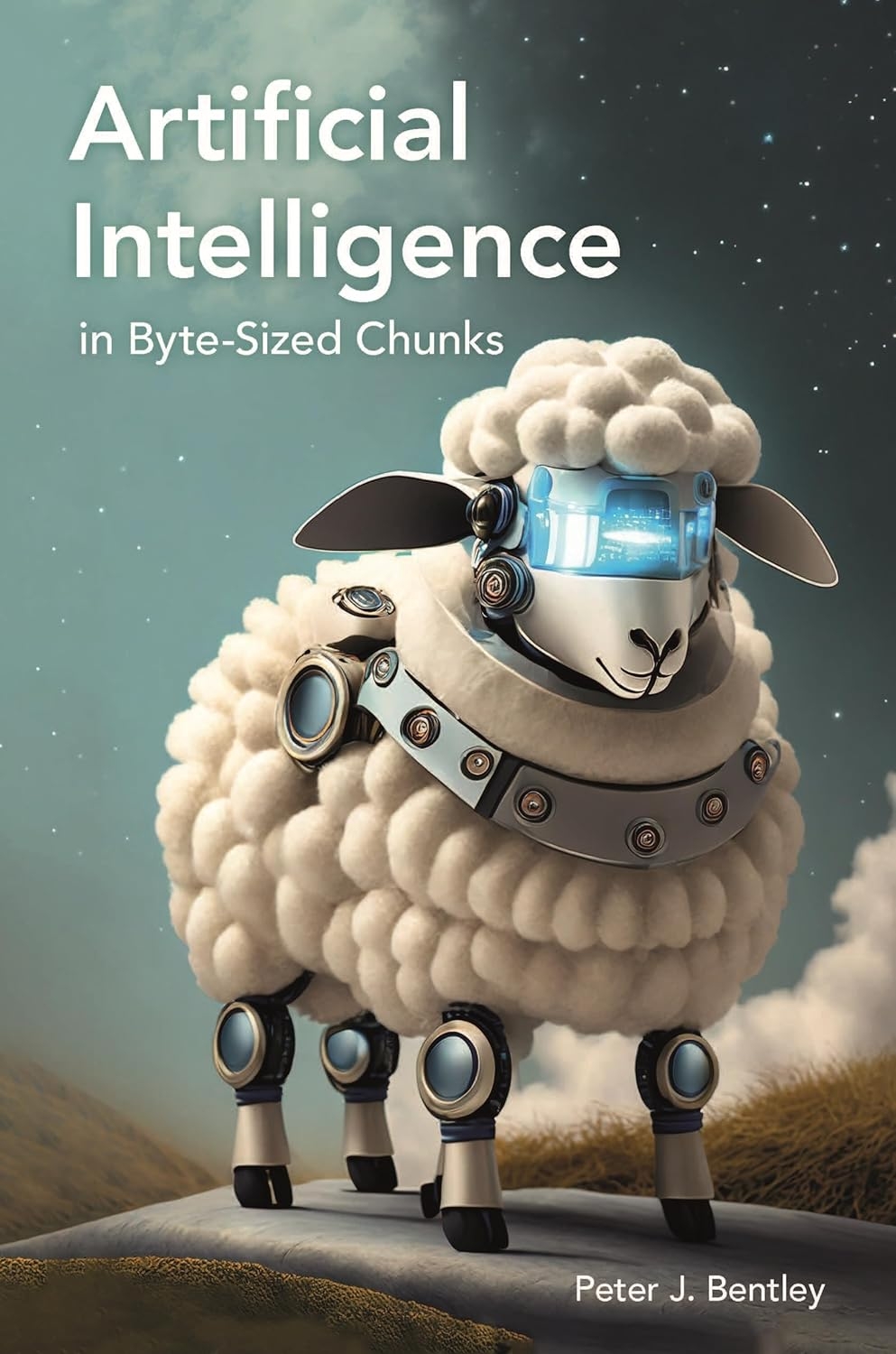
Artificial intelligence is headline news with the launch of the latest ChatGPT and Google Bard. But when did we start making computers mimic the human mind? And what is the reality of the capabilities of AI now, and in the future?

AI has always stirred emotions, and caused great excitement as well as great concern. Since the launch of large language models such as ChatGPT , the scope and capabilities of AI look set to transform our technology , in both good and bad ways. AI can help teach us how to write better or help us generate amazing artworks. But in the wrong hands, AI can create fake images and fake information that can be used to damage our societies. A new addition to the popular Bite-sized Chunks series, this expert-led book will explore how AI has developed from humble beginnings in the 1950s to today’s extraordinary AIs that have more neurons than the human brain. Focusing on specific AIs and their creators over the years, it explains the science and engineering behind each AI , discusses ethical issues and covers all the most fascinating information about one of the most important and contentious developments in human technology (including the latest on generative AI/ChatGPT), as well as what we can expect to see in the future of this field – all in short, accessible bite-sized chunks.

Artificial intelligence is headline news with the launch of the latest ChatGPT and Google Gemini. But when did we start making computers mimic the human mind? And what is the reality of the capabilities of AI now, and in the future?

AI has always stirred emotions, and caused great excitement as well as great concern. Since the launch of large language models such as ChatGPT, the scope and capabilities of AI look set to transform our technology, in both good and bad ways. AI can help teach us how to write better or help us generate amazing artworks. But in the wrong hands, AI can create fake images and fake information that can be used to damage our societies. A new addition to the popular Bite-sized Chunks series, this expert-led book will explore how AI has developed from humble beginnings in the 1950s to today’s extraordinary AIs that have more neurons than the human brain. Focusing on specific AIs and their creators over the years, it explains the science and engineering behind each AI, discusses ethical issues and covers all the most fascinating information about one of the most important and contentious developments in human technology (including the latest on generative AI/ChatGPT), as well as what we can expect to see in the future of this field – all in short, accessible bite-sized chunks.